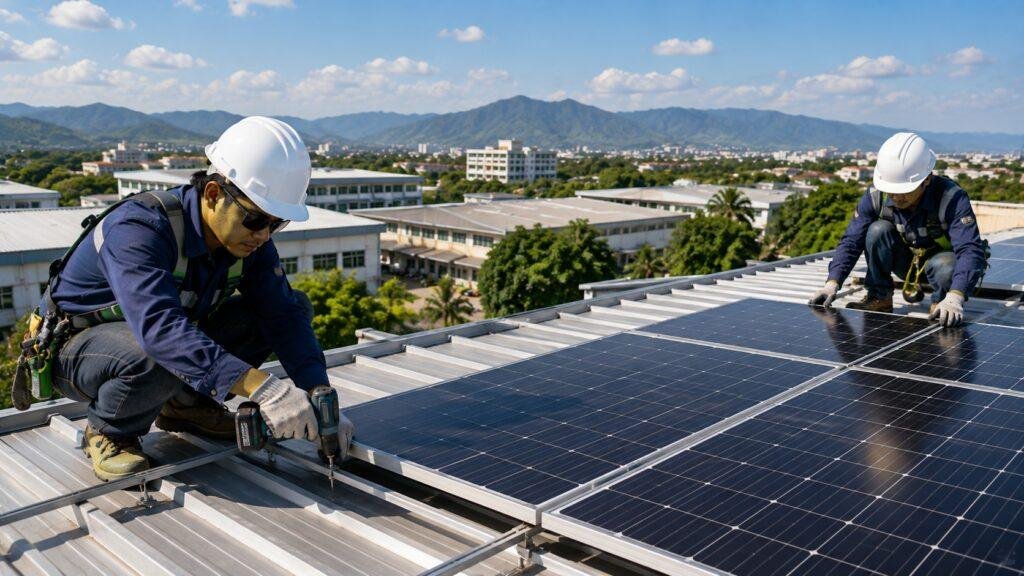
Solar Inverters Thailand – Choosing the Right Inverter for Your Home
A solar inverter is one of the most important components of a home solar system. While rooftop solar panels generate electricity from sunlight, the inverter converts that electricity into usable power for your home. Choosing the right inverter can therefore have a significant impact on the performance, monitoring capabilities and long-term reliability of your solar installation.
For homeowners in Thailand, there are several types of solar inverter available, including on-grid and hybrid options. The right choice depends on your household electricity usage, the size of your solar system, whether you want battery storage and how your energy requirements may change in the future.
At Right Price Solar, we design complete residential solar systems rather than selecting individual components in isolation. Every inverter is matched to the solar panels, electrical requirements and energy needs of the individual home, helping the complete system work efficiently together.
What Does a Solar Inverter Do?
Solar panels generate direct current (DC) electricity when exposed to daylight. Most household electrical equipment uses alternating current (AC), so the electricity generated on your roof needs to be converted before it can be used around the home.
This is the primary job of the solar inverter. It converts the DC electricity generated by the panels into AC electricity that can be used by household appliances such as air conditioning, lighting, refrigerators, televisions, pool pumps and other electrical equipment.
Modern solar inverters can also provide monitoring and energy-management functions, allowing homeowners to understand how their system is performing and how much solar electricity is being generated.
Different Types of Home Solar Inverters
There isn’t one type of inverter that’s suitable for every home. The correct choice depends on how the solar system will operate and whether battery storage forms part of the installation.
On-grid solar inverters are designed for solar systems that remain connected to the electricity network. Solar electricity generated during the day can be used within the home, reducing the amount of electricity that needs to be purchased from the grid.
Hybrid solar inverters can form part of a system incorporating compatible battery storage. Depending on the equipment and configuration, suitable surplus solar electricity generated during daylight hours can be stored for use later.
Off-grid inverters are used for properties designed to operate independently from the electricity network. These systems generally rely heavily on appropriately sized battery storage and require particularly careful system design.
We’ll explain the differences and recommend an inverter configuration based on how you actually use electricity at home.
On-Grid or Hybrid Inverter – Which Is Right for Your Home?
For many homeowners, this is one of the main decisions when planning a solar installation.
If much of your electricity is consumed during daylight hours, an on-grid system may provide a straightforward and cost-effective way to reduce electricity purchased from the grid. This can be particularly relevant for homes using air conditioning, swimming pool pumps or other electrical equipment during the day.
A hybrid system may be worth considering if you want compatible battery storage or have significant electricity consumption later in the day. However, adding battery storage increases the initial investment, so it should be considered as part of the overall energy requirements of the home.
There isn’t a universal answer. The right inverter is the one that works with the system your household actually needs.
Smart Solar Monitoring
Many modern solar inverters provide digital monitoring capabilities through compatible smartphone apps or online platforms.
Depending on the inverter and system configuration, homeowners may be able to monitor information such as:
- Current solar electricity generation
- Daily and historical solar production
- Household electricity consumption
- Electricity imported from the grid
- Battery status on compatible hybrid systems
- System operating information and alerts
Having access to this information can make it easier to understand when your solar panels are generating the most electricity and adjust household energy use accordingly.
Why Inverter Quality Matters
Solar panels are often the first thing homeowners think about when comparing solar systems, but the inverter deserves just as much consideration.
The inverter operates whenever the solar system is producing electricity and plays a central role in converting and managing that energy. Equipment quality, compatibility, manufacturer support and warranty arrangements should therefore all be considered when designing the installation.
It’s also important to think about the future. If you’re considering battery storage, an electric vehicle or changes to your household electricity requirements, discussing these plans before the system is designed can help ensure the equipment selected today is appropriate for your longer-term needs.
Choosing the Correct Inverter Size
Choosing a solar inverter isn’t simply a matter of buying the largest model available. The inverter needs to be appropriately matched to the solar array, electrical configuration and requirements of the property.
Several factors can influence the final recommendation, including:
- Number and capacity of solar panels
- Household electricity consumption
- Electrical configuration of the property
- Roof layout and solar array design
- Battery storage requirements
- Potential future electricity demand
At Right Price Solar, we consider the inverter as part of the complete system design rather than treating it as a standalone purchase.
Professional Solar System Design
Even high-quality equipment needs to be correctly specified and installed. That’s why every Right Price Solar residential project begins with a free site survey and electrical inspection.
We assess the property, roof space and household electricity requirements before recommending the solar panels, inverter and compatible battery storage where appropriate.
This helps ensure the individual components are designed to work together as one complete home energy system rather than simply assembling a collection of solar products.
Why Choose Right Price Solar?
We believe homeowners should understand why particular solar equipment has been recommended for their property. Our approach is to assess your requirements first and then design the system around them.
- Free site survey
- Free electrical inspection
- Bespoke residential solar system design
- Premium solar panels and inverters
- On-grid and hybrid options
- Compatible battery storage options
- Experienced installation specialists
- Manufacturer warranties
- 2-year workmanship warranty
- After-sales support
We’ll explain the available inverter options clearly so you can understand what you’re buying and how it fits into the overall design of your home solar system.
Learn More About Home Solar
Explore our Solar Packages, estimate your potential savings using our Solar Calculator, browse our Frequently Asked Questions or discover more in our Useful Solar Articles.
For official information about electricity services in Thailand, visit the Provincial Electricity Authority (PEA). National energy information is also available through the Energy Policy and Planning Office (EPPO).
Frequently Asked Questions
What does a solar inverter do?
A solar inverter converts the DC electricity generated by solar panels into AC electricity that can be used by electrical equipment within your home.
What’s the difference between an on-grid and hybrid inverter?
An on-grid inverter operates as part of a solar system connected to the electricity network. A compatible hybrid inverter can also manage battery storage as part of the overall system configuration.
Can I monitor my solar inverter from my phone?
Many modern solar inverters provide compatible smartphone or web-based monitoring, although the exact features depend on the manufacturer, model and system configuration.
Do I need a hybrid inverter if I want a battery?
Battery compatibility depends on the inverter and overall system design. If you think you may want battery storage, it’s worth discussing this before the solar system is specified.
Which solar inverter is best for my home?
There isn’t one inverter that’s best for every property. The right choice depends on your solar system size, household electricity usage, electrical configuration, battery requirements and future plans.
Find the Right Solar Inverter for Your Home
If you’re planning a home solar installation in Thailand, Right Price Solar can help you choose an inverter as part of a complete professionally designed system.
We’ll assess your property and electricity requirements, explain the available options and provide a free, no-obligation quotation for a solar system designed around your home.