
Battery Storage Chiang Mai
If you are considering battery storage in Chiang Mai, adding a battery to your solar energy system can allow you to store electricity generated during daylight hours and use it later when your solar panels are producing less or no power. This can help homes and businesses make greater use of the renewable electricity they generate themselves.
During the day, solar panels may sometimes produce more electricity than the property is using at that moment. With battery storage, some of this surplus energy can be stored rather than immediately going unused. The stored electricity can then be available during the evening, overnight or at other times when electricity demand exceeds current solar generation.
Battery storage can be particularly useful for Chiang Mai households with significant evening electricity consumption from air conditioning, lighting and appliances. Businesses that continue operating after sunset may also benefit from being able to use more of the solar electricity generated earlier in the day.
However, battery storage should always be sized around actual electricity requirements. At Right Price Solar, we believe the aim should be to find the appropriate balance between storage capacity, initial investment and the amount of stored energy you are realistically likely to use. Understanding your daytime and evening electricity consumption is therefore an important first step when deciding whether solar battery storage is right for your Chiang Mai property.
How Does Battery Storage Work with Solar in Chiang Mai?
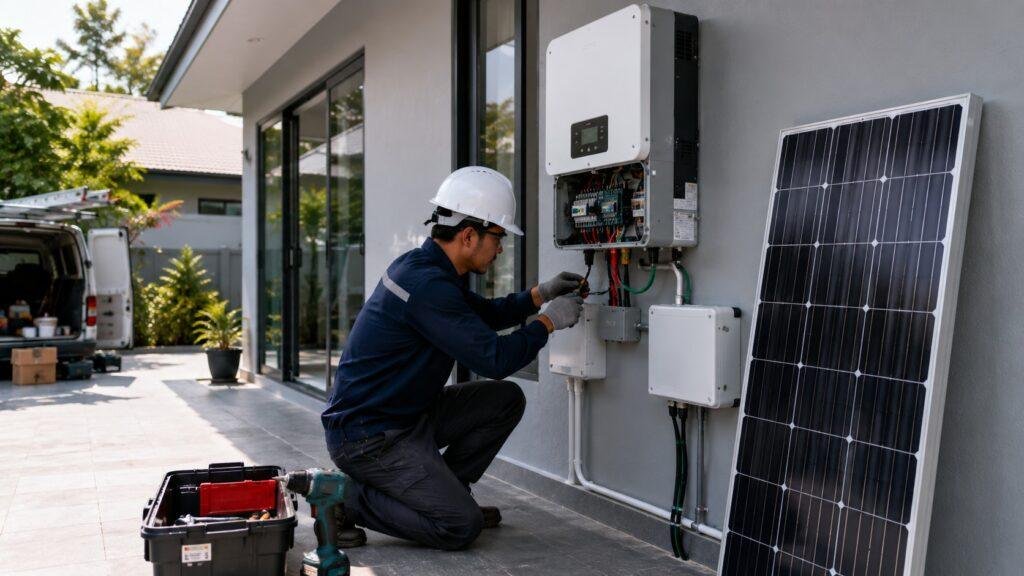
Battery storage works alongside your solar panels by capturing electricity that is generated but not immediately required by your home or business. During daylight hours, the electricity produced by the panels is normally used first to power appliances and equipment within the property. When solar generation exceeds that immediate demand, surplus electricity can be directed into the battery.
Later in the day, as solar generation reduces or stops, the stored energy can be used to help meet the property’s electricity requirements. This can allow Chiang Mai households to power evening lighting, appliances and air conditioning using electricity generated by their solar panels earlier in the day. Businesses operating into the evening can potentially benefit in a similar way.
The amount of battery storage required will depend on how much surplus solar electricity is available and how much energy the property typically consumes after daylight hours. Installing a larger battery than you can regularly charge and use may unnecessarily increase the cost of the system.
For this reason, solar generation, daytime consumption and evening electricity usage should all be considered together. Correctly matching battery capacity to the property can help maximise the practical value of stored solar energy while avoiding unnecessary investment.
Is Solar Battery Storage Worth It in Chiang Mai?
Whether battery storage is worthwhile in Chiang Mai depends largely on how your property uses electricity after the solar panels have stopped generating. If a significant proportion of your electricity consumption occurs during the evening or overnight, storing surplus daytime solar energy can allow you to use more of the electricity you generate yourself.
For households, evening electricity consumption can include air conditioning, lighting, cooking, entertainment systems and other appliances. Businesses such as hotels, restaurants and hospitality venues may also continue using substantial amounts of electricity after sunset, potentially creating a stronger case for battery storage.
However, batteries add to the initial cost of a solar installation, so the financial benefit should be considered carefully. A larger battery is not automatically better. The most appropriate capacity should reflect how much surplus solar electricity your system can generate and how much stored energy you are realistically likely to use.
At Right Price Solar, we believe battery storage should be considered as part of the complete solar system rather than as a separate purchase. By reviewing your electricity consumption throughout the day and evening, you can make a more informed decision about whether battery storage offers worthwhile practical and financial benefits for your Chiang Mai property.
Official Battery Storage Information
If you are considering battery storage in Chiang Mai, these official Thai organisations provide useful information about renewable energy, electricity, energy efficiency and the standards relevant to solar panels, inverters and battery storage systems.
Useful Solar Guides
If you are considering battery storage in Chiang Mai, our practical guides can help you understand how solar batteries work, compare different types of solar systems and determine the appropriate system size for your property.
Choosing the Right Battery Storage System in Chiang Mai
Choosing the right battery storage system in Chiang Mai starts with understanding how much solar electricity your property generates and when you use the most energy. Battery capacity should be matched to your actual requirements rather than simply choosing the largest storage option available.
For homes with significant evening electricity consumption, battery storage can allow more of the solar energy generated during the day to be used after sunset. Businesses with extended operating hours may benefit for similar reasons, particularly where electricity demand remains high into the evening.
At Right Price Solar, we can review your electricity consumption, solar generation requirements and usage patterns to help determine whether battery storage is appropriate and what capacity may provide the best balance between cost and practical benefit.
If you are considering battery storage in Chiang Mai, contact the Right Price Solar team to discuss your property or use our online solar savings calculator to explore how solar could potentially reduce your electricity costs.