
On-Grid vs Hybrid Solar for Businesses Chiang Mai
Should My Chiang Mai Business Choose On-Grid or Hybrid Solar?
Choosing between an on-grid and hybrid solar system is an important decision for a business investing in solar. Both can reduce the amount of electricity purchased from the grid, but they operate differently. The right choice depends on factors such as when the business uses electricity, whether battery storage is required, the importance of backup capability and the overall objectives of the commercial solar installation.
The Best System Depends on How Your Business Uses and Needs Electricity
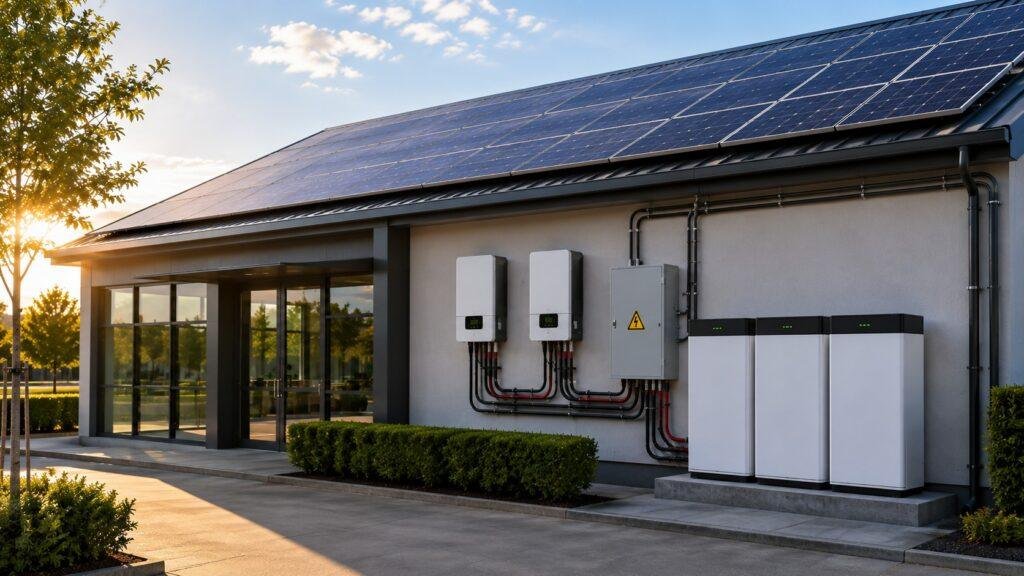
An on-grid commercial solar system is generally designed to use solar electricity alongside the grid without battery storage, making it particularly relevant to businesses with strong daytime electricity demand. A hybrid system incorporates the ability to work with battery storage, allowing suitable solar energy to be stored for later use and potentially providing additional flexibility. Neither option is automatically better; the system should be selected around the business’s consumption pattern, operational requirements and budget.
How Do On-Grid and Hybrid Solar Systems Work Differently?
An on-grid system allows a business to use solar electricity while remaining connected to the electricity grid, with the grid supplying additional power whenever solar generation is insufficient. A hybrid system adds battery capability, allowing suitable surplus solar energy to be stored for use later. For businesses with high daytime consumption, an on-grid solution may provide a straightforward way to reduce grid electricity use, while businesses with significant evening demand or specific energy requirements may find the additional flexibility of a hybrid system worth considering.
What Should a Business Consider When Choosing Between On-Grid and Hybrid Solar?
The decision should consider the business’s daytime and evening electricity consumption, operating hours, available budget and whether storing solar energy provides a genuine commercial benefit. Battery capacity and future energy requirements should also be considered when assessing a hybrid system. For many businesses, the priority is achieving the strongest practical return from solar, so the system should be designed around actual electricity usage rather than choosing a particular technology simply because it offers more features.
Useful Commercial Solar Resources
Which Commercial Solar System Is Right for Your Chiang Mai Business?
Both on-grid and hybrid solar can provide an effective way for Chiang Mai businesses to reduce their reliance on grid electricity, but the right choice depends on how the business operates. Understanding daytime and evening consumption, future energy requirements and whether battery storage will provide genuine value allows the system to be designed around the business rather than the technology. A commercial solar assessment can help identify which approach offers the strongest combination of practicality, savings and long-term value.