Solar Panels for Warehouses Chiang Mai
Are Warehouses in Chiang Mai Suitable for Commercial Solar Panels?
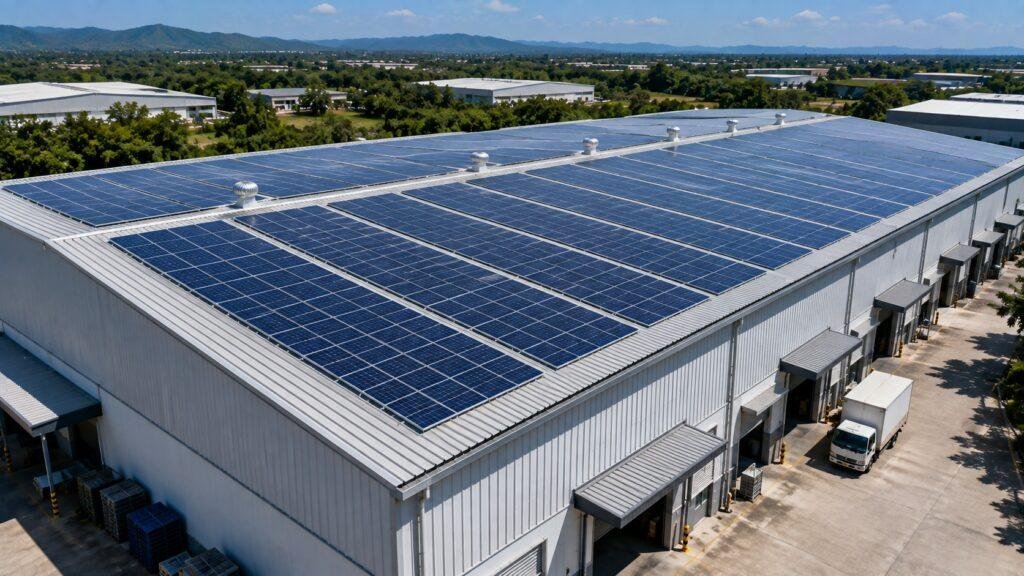
Warehouses can offer excellent opportunities for commercial solar, particularly where large areas of otherwise unused roof space are available. Electricity may be required throughout the working day for lighting, ventilation, air conditioning, refrigeration, machinery, offices and other equipment. For warehouses in Chiang Mai, generating solar electricity on-site can help reduce reliance on grid power while making productive use of the building itself.
Large Roof Areas Can Make Warehouses Strong Candidates for Solar
A warehouse with suitable roof space and meaningful daytime electricity consumption can be well suited to a commercial solar installation. The available roof area may provide space for a substantial number of panels, but the system should still be designed around the electricity requirements of the business rather than simply filling the roof. Assessing consumption, operating hours, roof suitability and future energy requirements helps determine the appropriate system size and the potential commercial return.
Why Warehouse Roofs Can Be Ideal for Commercial Solar
Warehouse buildings often have large, relatively open roof areas that can provide valuable space for solar panels without taking up additional land. Where the business also has consistent daytime electricity demand, the energy generated can be used directly to support lighting, cooling, refrigeration, machinery, offices or other operations. A site assessment can determine how much of the roof is genuinely suitable and how the available space can be matched to the warehouse’s electricity requirements.
What Should a Warehouse Consider Before Installing Solar?
Before installing commercial solar, a warehouse should consider its electricity consumption, operating hours, usable roof area and the structural condition of the building. Shading, roof-mounted equipment and access requirements can affect the available installation space, while future changes such as additional machinery, refrigeration, cooling or EV charging may influence future electricity demand. Assessing these factors together helps ensure the solar system is designed around both the property and the long-term requirements of the business.
Useful Commercial Solar Resources
Could Your Warehouse Roof Become a Valuable Business Asset?
For Chiang Mai warehouses with suitable roof space and consistent electricity demand, commercial solar can turn an otherwise unused area of the building into a productive energy-generating asset. The right system should be designed around the warehouse’s actual electricity consumption, available installation space and future requirements. A commercial solar assessment can help establish the practical system size, potential electricity savings and whether solar represents a worthwhile long-term investment for the business.