Solar Panels for Farms Chiang Mai
Can Solar Panels Reduce Electricity Costs for Farms in Chiang Mai?
Farms and agricultural businesses can have significant electricity requirements for irrigation pumps, water systems, ventilation, cooling, refrigeration, processing equipment and other operations. Where this equipment runs during daylight hours, solar provides an opportunity to generate electricity on-site at the same time it is needed. For farms in Chiang Mai, this can help reduce reliance on grid electricity and control ongoing energy costs.
Agricultural Daytime Energy Use Can Be Well Suited to Solar
Commercial solar can be particularly relevant to farms where pumps, cooling systems or other electrical equipment operate regularly during the day. Solar electricity generated on-site can be used directly by suitable farm operations, reducing the amount of electricity purchased from the grid. The right system will depend on the farm’s consumption, operating patterns, available installation space and equipment requirements, so an assessment of the individual agricultural business is essential before determining the appropriate system size.
Where Can Solar Make the Biggest Difference on a Farm?
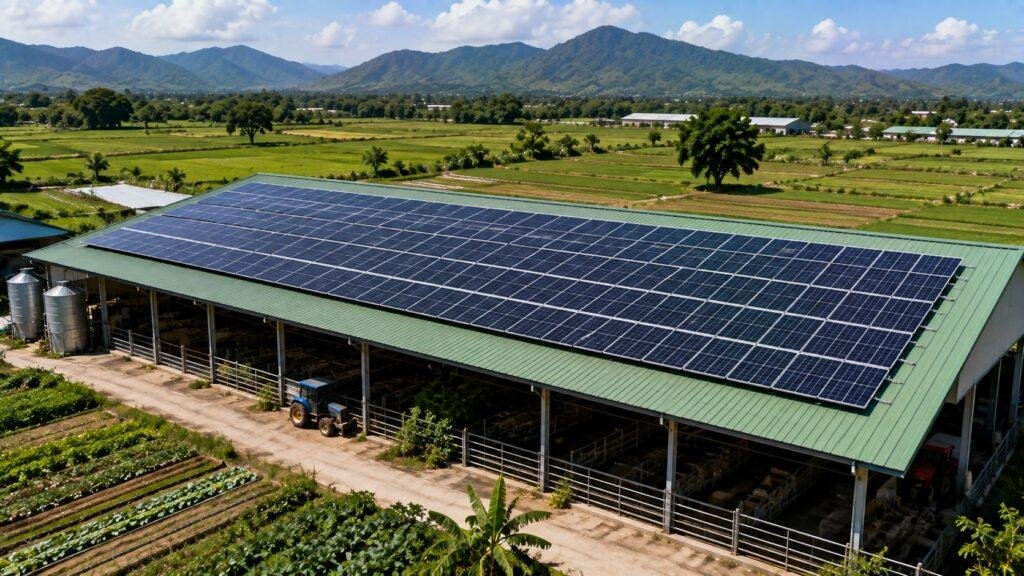
The value of commercial solar depends on where and when electricity is being consumed across the farm. Irrigation and water pumps, cooling and ventilation systems, refrigeration, processing equipment and agricultural buildings can all create significant daytime demand. Farms may also have several potential installation locations, including barns, storage buildings, processing areas or suitable ground space, allowing the solar system to be designed around both the available site and the energy requirements of the agricultural operation.
What Should a Farm Consider Before Installing Solar?
Before investing in commercial solar, a farm should consider its electricity consumption, when pumps and other equipment operate, available roof or ground space and how energy requirements change throughout the year. Irrigation cycles, cooling, refrigeration, processing and future expansion can all influence the system design. Assessing these factors together helps ensure the solar installation is matched to the farm’s actual requirements and provides a realistic basis for estimating potential electricity savings and long-term value.
Useful Commercial Solar Resources
Could Commercial Solar Be a Smart Investment for Your Chiang Mai Farm?
For farms with suitable installation space and meaningful daytime electricity demand, commercial solar can provide a practical way to reduce long-term energy costs. Electricity generated on-site can help support pumps, cooling, refrigeration and other agricultural operations while reducing reliance on grid power. By assessing the farm’s actual electricity usage, seasonal requirements and available space, it is possible to determine whether solar can deliver worthwhile savings and long-term value for the agricultural business.