
Solar EV Charging for Businesses Chiang Mai
Can a Chiang Mai Business Use Solar Power for EV Charging?
As electric vehicles become more widely used, businesses may need charging facilities for company vehicles, employees, customers or guests. EV charging adds to a property’s electricity demand, but where vehicles are connected during daylight hours, commercial solar can help provide some of that electricity directly on-site. For Chiang Mai businesses, this creates an opportunity to consider solar generation and EV charging as part of the same wider energy strategy.
Commercial Solar Can Work Alongside Business EV Charging
Solar electricity generated during the day can contribute towards the power required by EV chargers while also supporting the business’s other electricity needs. How much of the charging demand can be supplied by solar depends on the size of the solar system, the number and capacity of chargers, when vehicles are connected and the property’s wider electricity consumption. Assessing these requirements together allows the solar and charging infrastructure to be planned around the way the business actually operates.
How Can Solar and EV Charging Work Together for a Business?
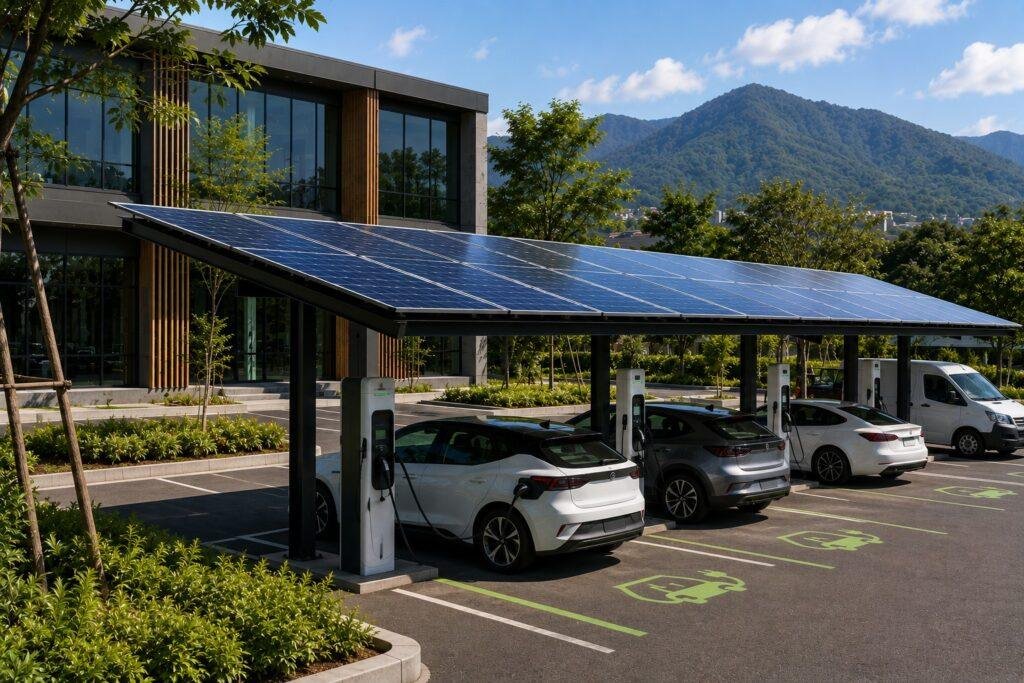
The strongest opportunity comes when vehicles can be charged during periods of good solar generation. Workplace vehicles, company fleets, customer cars or golf buggies may spend several hours parked during the day, allowing suitable charging demand to overlap with solar production. The system needs to account for the business’s existing electricity consumption as well as the additional demand created by EV chargers, ensuring that both the solar installation and charging infrastructure are designed around realistic usage.
What Should a Business Consider Before Installing Solar EV Charging?
Before combining commercial solar with EV charging, a business should consider how many vehicles need to be charged, when they are likely to be connected, charger capacity and the property’s existing electricity demand. Available solar generation, electrical infrastructure and future requirements such as additional chargers or an expanding vehicle fleet should also be considered. Planning these elements together helps ensure the system can support both current business operations and the additional electricity required for EV charging.
Useful Commercial Solar Resources
Could Solar EV Charging Support the Future of Your Chiang Mai Business?
For businesses planning to introduce EV charging, commercial solar provides an opportunity to generate some of the required electricity directly on-site. Whether charging company vehicles, employees’ cars, customer vehicles or a commercial fleet, designing the solar and charging systems together can help manage future electricity demand more effectively. Assessing current consumption, expected charging requirements and available installation space can help determine the most practical long-term solution for the business.