Solar Panels for Golf Courses Chiang Mai
Can Commercial Solar Reduce Electricity Costs for Golf Courses in Chiang Mai?
Golf courses can have substantial and varied electricity requirements across their facilities. Clubhouses, restaurants, kitchens, air conditioning, water systems, maintenance buildings, workshops and electric golf buggy charging can all contribute to ongoing energy costs. With much of this activity taking place during daylight hours, commercial solar can provide an opportunity for Chiang Mai golf courses to generate and use their own electricity on-site.
Golf Courses Can Be Strong Candidates for Commercial Solar
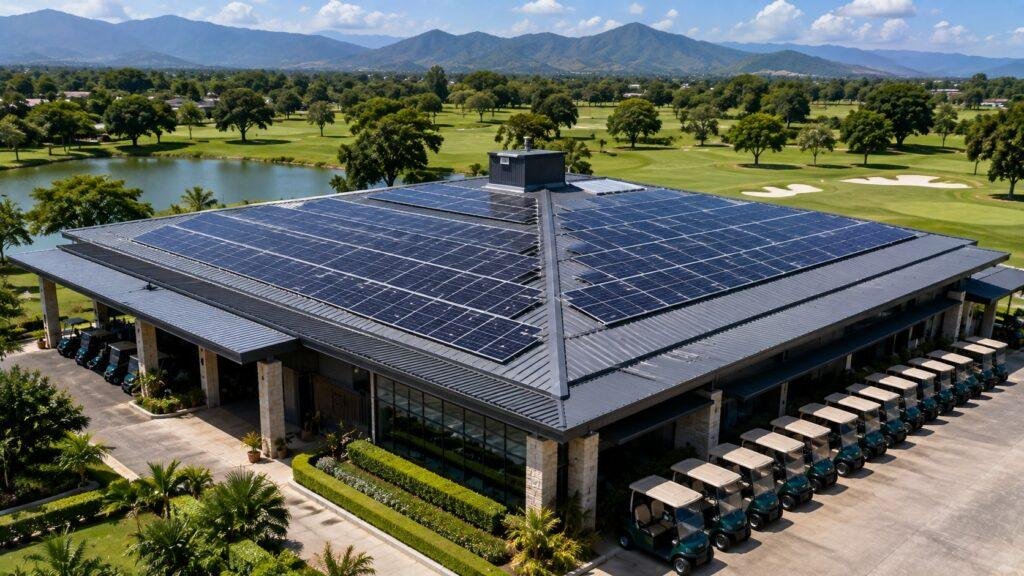
Golf facilities often combine significant daytime electricity demand with multiple potential locations for solar panels, including clubhouse roofs, maintenance buildings and covered parking or buggy areas. The right solution depends on the individual course, its electricity consumption and available installation space. By assessing how and when energy is being used, a commercial solar system can be designed to reduce grid electricity consumption while supporting the wider operation of the golf facility.
Where Can Solar Fit Into a Golf Course Operation?
Commercial solar does not have to be limited to the main clubhouse roof. Depending on the site, panels may be suitable for maintenance buildings, workshops, offices, storage areas or purpose-built covered parking and golf buggy charging areas. This gives golf courses the opportunity to consider solar across different parts of the property and match generation with daytime electricity demand, while making productive use of existing or newly created covered spaces.
What Should a Golf Course Consider Before Installing Solar?
Before investing in commercial solar, a golf course should assess where electricity is being consumed, when demand is highest and which areas of the property offer suitable installation space. Clubhouse operations, irrigation and water systems, maintenance facilities, kitchens, air conditioning and electric golf buggy charging may all need to be considered. Understanding these different energy requirements allows the solar system to be designed around the actual operation of the course and provides a stronger basis for estimating potential savings and return on investment.
Useful Commercial Solar Resources
Could Commercial Solar Deliver Long-Term Value for Your Chiang Mai Golf Course?
For golf courses with significant daytime electricity demand and suitable installation areas, commercial solar can provide a practical way to reduce long-term energy costs. Clubhouses, maintenance facilities, operational buildings and covered buggy areas can all potentially form part of a wider solar strategy. By assessing electricity consumption across the entire facility, a Chiang Mai golf course can identify where solar could provide the greatest benefit and build a clearer picture of the potential savings and long-term return.