
Solar Panels for Offices Chiang Mai
Can Solar Panels Reduce Electricity Costs for Offices in Chiang Mai?
Office buildings can consume substantial amounts of electricity throughout the working day. Air conditioning, computers, servers, lighting, lifts, meeting rooms and other equipment all contribute to ongoing energy costs. Because much of this electricity is used during daylight hours, commercial solar can provide Chiang Mai offices with an opportunity to generate power on-site when the building is actively consuming it.
Office Working Hours Can Be an Excellent Match for Solar
Many offices operate primarily during the same hours that solar panels are producing electricity. This allows suitable solar generation to be used directly within the building, reducing the amount of electricity that needs to be purchased from the grid. The potential benefit depends on the office’s consumption, available installation space and system design, so assessing the individual property and its daytime energy profile is the best starting point.
Why Office Energy Use Can Work Well with Commercial Solar
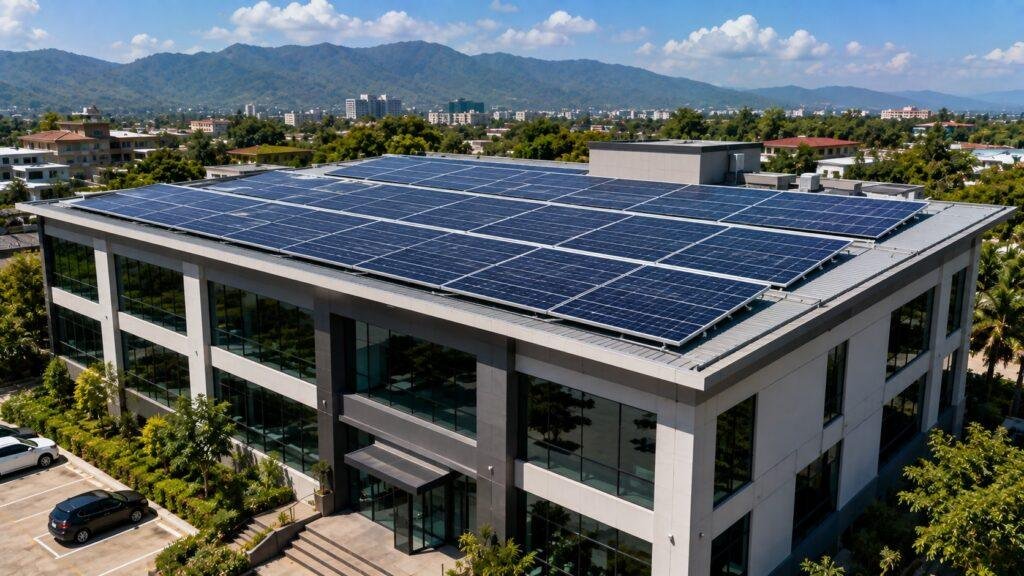
Office electricity demand is often concentrated during daylight working hours, creating a natural overlap with solar generation. Air conditioning can represent a significant part of this demand in Chiang Mai, alongside computers, lighting, servers and other office equipment. Where suitable roof or installation space is available, a correctly sized solar system can generate electricity during these busy periods and help reduce the amount of grid power the office needs to purchase.
What Should an Office Consider Before Installing Solar?
Before investing in commercial solar, an office should consider its daytime electricity consumption, operating hours, available roof or installation space and the equipment responsible for the greatest energy demand. Air conditioning, servers, lifts and future requirements such as additional workspace or EV charging may all influence the system design. Assessing these factors together helps ensure the solar installation is sized around the building’s actual needs and provides a realistic basis for estimating potential savings and return on investment.
Useful Commercial Solar Resources
Could Commercial Solar Reduce the Long-Term Running Costs of Your Chiang Mai Office?
For offices with suitable installation space and consistent daytime electricity demand, commercial solar can provide a practical way to reduce long-term energy costs. A system designed around the building’s actual consumption can help offset electricity used for air conditioning, computers, lighting and other essential equipment. Assessing the property, electricity usage and future requirements can help establish the potential savings and whether commercial solar represents a worthwhile long-term investment for the business.